A few months ago, during my usual free-time gaming session, I was scrolling through some old chat histories. It hit me—damn, we used to play this incredible game about 10 to 15 years ago, and there is simply nothing like it on the market today. I didn't care if a modern version would get famous or not; I just wanted to play it again.
I’ve always dreamed of making games. As I grew into my career as a Product Manager, I realized my true passion lies in building things people actually use and enjoy. There's a unique pride in looking at a product and saying, "I built that." You end up feeling as proud of it as you would a child.
But knowing how to build a standard tech product and knowing how to build a game are two very different things. I had no idea how to start.
Phase 1: The Web Tools
First, I tried to create the game using the simplest approach possible: web tools like Node.js. Up to this point, AI was completely helpful in getting things off the ground. The problem? The end result just didn't look or feel like a real game.
I realized I needed a proper game engine.
Phase 2: The Complexity Wall
After trying out a few different engines, I settled on Unity.
I started building alongside GitHub Copilot Pro. At first, it was great! But as soon as the mechanics layered on top of each other and the complexity grew, everything fell apart. The code broke, the game wouldn't work, and honestly, I was devastated.
(Side note: I also tried the open beta for Unity's native AI during this phase, and let's just say... it was the worst.)
Phase 3: The Breakthrough
I refused to give up. I decided to start over, but this time I pivoted to Windsurf.
I had been hearing a lot about agentic AI models, so I applied the BMAD method using Windsurf and just started to build, and build, and build.
And it is working.
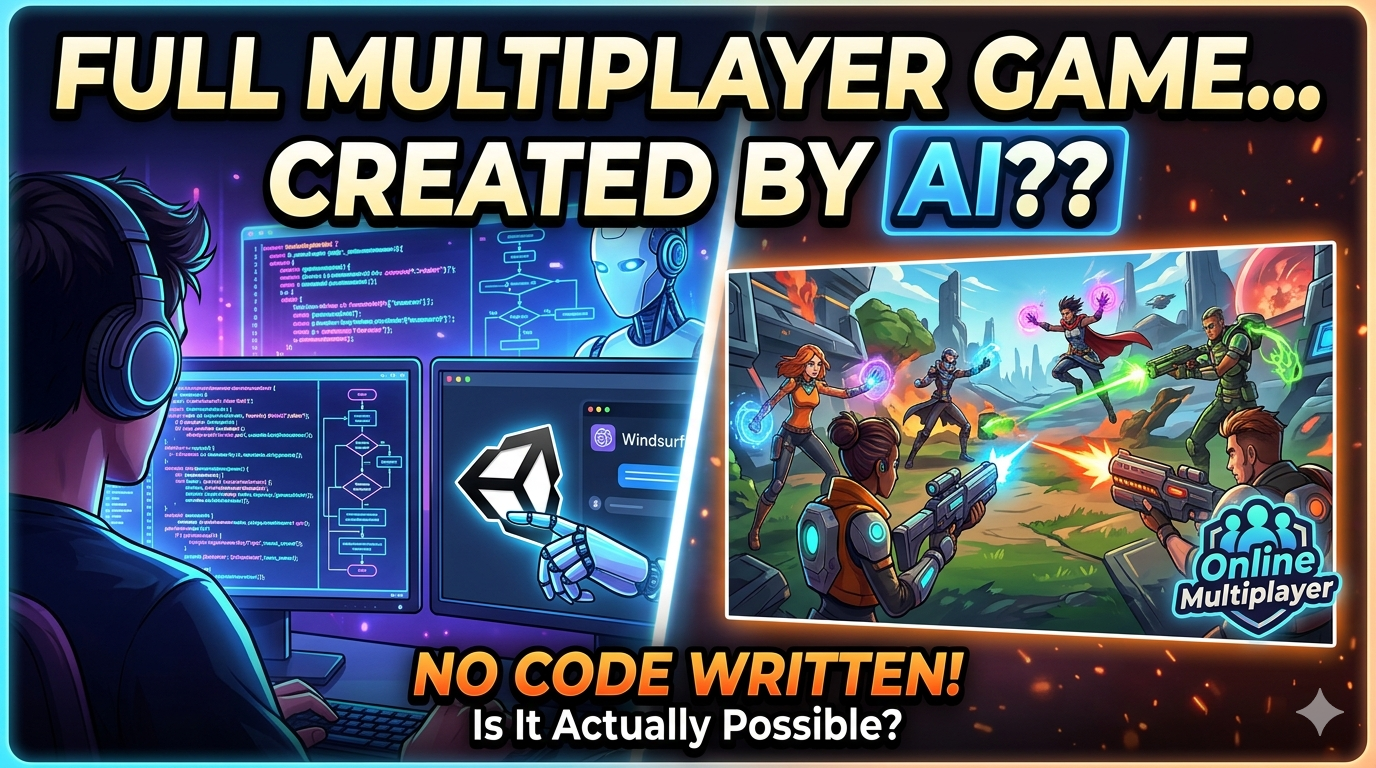
I am currently building a complex online multiplayer game, and I am not writing a single line of code myself.
The Biggest Challenge?
The UI. User interfaces are notoriously difficult for AI to nail down perfectly. It can generate something functional—maybe not a polished AAA-studio masterpiece right out of the gate—but it gives me a solid foundation that can always be refined later.
The Philosophy of "Vibe Coding"
As I sit here right in the middle of building this project, I genuinely believe it is possible to build an entire game with AI.
Some people might think using AI to build a game takes the soul out of it, but I disagree. It isn't inappropriate or "cheating."
The idea, the story, and the core direction are still coming from a human mind. You are still the creative force behind the world you are building; the AI is just the tool translating your vision into reality.
Maybe I will fail. Maybe I won't. But what truly matters is starting something you enjoy, without worrying about whether it will win big awards or result in a massive financial outcome.
I’ll be posting another update later on to let you know exactly what happens with my Vibe Coding game. Stay tuned!